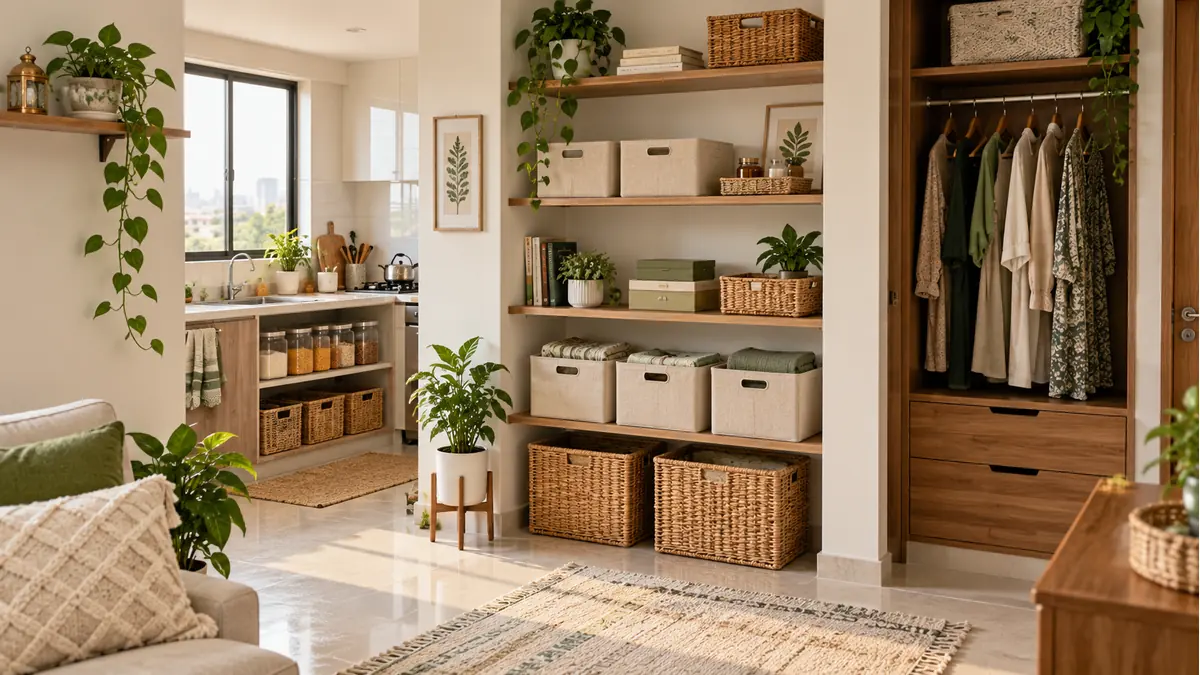
Small homes can feel comfortable and spacious when every item has a clear place. The best approach is not to buy more storage immediately, but to understand what you use, remove unnecessary clutter and choose organizers that fit the available space. This practical guide shares simple small home organization ideas for apartments, bedrooms, kitchens and bathrooms in Pakistan.
Start With Decluttering, Not Shopping
Before selecting baskets, racks or containers, sort your belongings into four groups: keep, relocate, donate and discard. Keep frequently used items within easy reach and move seasonal or rarely used belongings to higher shelves or protected storage. This prevents you from spending money on organizers for things you no longer need.
Measure Every Space Before Buying an Organizer
Measure the width, depth and height of the shelf, cabinet, drawer or corner you want to organize. Also check whether doors and drawers can open freely. Product photos can make an organizer look larger or smaller than it is, so compare its listed dimensions with your measurements before placing an order.
Use Vertical Space
Walls and cabinet doors offer useful storage without occupying valuable floor space. Depending on the room, you can consider wall-mounted racks, hooks, over-door organizers or stackable shelves. Keep heavier items at a safe height and make sure any wall-mounted solution is installed according to the wall type and product instructions.
Choose Organizers for Each Room
Kitchen
Group similar items together, such as spices, cleaning supplies, utensils and food packets. Drawer dividers, stackable containers and under-sink organizers can reduce wasted cabinet space. Store everyday items close to the preparation area and keep cleaning products separate from food.
Bathroom
Bathrooms need organizers that are easy to clean and suitable for a humid environment. Use separate sections for daily toiletries, grooming products and spare supplies. Avoid overcrowding shelves, and keep medicines or unsafe products away from children and moisture.
Bedroom and Wardrobe
Use wardrobe shelves by category rather than mixing everything together. Fold frequently used clothes where they remain visible, use boxes for seasonal items and keep accessories in smaller compartments. Under-bed storage can be helpful when it does not block ventilation or make cleaning difficult.
Dressing Table and Makeup Area
Separate daily-use makeup from occasional products. Clear or divided organizers make smaller items easier to find, while brushes and applicators should be kept clean and dry. Check expiry dates regularly instead of allowing old products to occupy limited space.
Prefer Multi-Purpose and Stackable Storage
In a small home, an organizer is more useful when it can adapt to different rooms or changing needs. Stackable containers, modular dividers and multipurpose baskets can be rearranged later. However, do not stack items so high that they become unstable or difficult to access.
Keep Frequently Used Items Accessible
A practical system should save time. Store daily essentials between waist and eye level, occasional items on upper shelves and heavier objects lower down. Labels can help family members return items to the correct place, especially inside closed boxes and cabinets.
Check Material, Cleaning and Weight Capacity
Before buying, consider what the organizer will hold and where it will be used. Plastic can be easy to wipe clean, fabric boxes can suit lightweight wardrobe items, and metal racks may work well when their finish is suitable for the environment. Always follow the stated weight limit and care instructions.
A Simple Weekly Organization Routine
- Return misplaced items to their assigned space.
- Wipe shelves, containers and frequently touched organizers.
- Remove empty packaging and expired products.
- Check whether the current system is still convenient.
- Adjust one problem area at a time instead of reorganizing the entire home.
Common Mistakes to Avoid
- Buying organizers before measuring the available space.
- Choosing appearance over practical size and function.
- Filling every container without leaving room for easy access.
- Ignoring ventilation, moisture or cleaning requirements.
- Keeping duplicate or unused items only because storage is available.
Frequently Asked Questions
How can I organize a small home on a budget?
Begin by decluttering and reusing containers you already own. Buy a new organizer only for a clearly identified problem area, and compare its dimensions and material before ordering.
Which room should I organize first?
Start with the area that causes the most daily inconvenience, such as a crowded kitchen counter, wardrobe or bathroom shelf. Completing one small area makes the process easier to maintain.
Are stackable organizers suitable for every space?
No. They work best on a stable, level surface with enough height and safe access. Avoid unstable stacking, especially around children or where heavy objects could fall.
Final Checklist
Declutter first, measure carefully, match the material to the room and keep daily items accessible. A few well-chosen organizers are usually more useful than many containers without a clear purpose. Explore more practical ideas in our home essentials guide or browse the Kaisz online shop when you are ready to compare suitable options.
Related

 Kemei KM-6330 Price in Pakistan – 3 in 1 Trimmer Rated 5.00 out of 5